Episode Transcript
[00:00:00] Sarah: Foreign.
Welcome back to Fiber in Between. Today's topic is all about Caprine. I'm your host, Sarah, and with me I have Rachel and
[00:00:17] Angela: Angela,
[00:00:18] Sarah: and we're going to be talking about how Caprine came to be, what mom did to get it going, why she got it going, and where we're at now. So take it away, Mom.
[00:00:28] Angela: So Caprine was my baby to start with.
And it came out of a meeting I had with in town. There was a USDA person that had a meeting on funding to create products from your farm. So I went to this meeting for Value Added producer grants.
And because I had so much mohair, what am I going to do with all this mohair? I've got to create something, but it costs a lot of money to do that. So I went to this meeting and the wheels started turning. It's like, I can do this, I can build this.
And it requires a grant. And I wasn't going to hire a grant writer. Number one, they're expensive. Number two, I thought, how could a grant writer understand my business, my goats, as well as I do my mohair? So I started diving into this value Added producer grant, and they have this document set up for this grant that walks you through it, and you just answer all these questions. So I started going through the document. They call it the toolkit, and it really requires you to dive deep and explore your business.
I realized I didn't even have a business plan, and the whole grant is based off of a business plan. So I jump in thinking, I'm going to start this business. And it's like, wait, I need to start backpedaling because I don't even know what I want to do. How am I going to do it? So I created a business plan which became the foundation of this grant that I wrote. And it took me about two, two and a half years to completely flesh out this business from how am I going to make a product?
How much money will this product make to validate the need for a grant? Is it going to be profitable? Because the USDA does not want to support a business that they're going to lose money on. So you have to go from beginning to end and completely conceptualize this business, which was a very good exercise for me to understand what I'm going to make. And through the process, I had to find business partners that would work with me on this. And by business partners, I mean, like, who's going to spin the yarn? Who's going to make it into a product? What product am I going to make? With it.
So it was through lots of phone calls, lots of emails, some doors open, some doors closed, and some doors referred me to another door. I was able to learn so much about the textile industry that I had no clue of. That's where I learned I needed to micron test my mohair, because if you don't know what you have, how do you know what you're going to make with it? So that's where our micron testing started.
It's also where I learned that craft yarn and yarn to make socks and throws is not the same thing. And it's a completely different language that I had to learn.
And in the process, through all of these doors opening and closing, all the information I learned, I was able to piece together a supply chain to take the raw mohair.
It has to be washed, then it has to be carded out, where all the fibers are lined up, has to be blended with wool because you cannot make 100% mohair socks.
And it needs to be spun into yarn and just the right thickness of yarn, not too thick, not too thin.
And then you have to find someone who's going to knit it or weave it. So socks are, are knitted and throws are woven.
So that was the supply chain that I created for Caprine. Now who am I going to sell this to?
I am into natural fibers. That's what we do here. We raise naturally colored angora goats. I prefer not to dye anything. I love the natural colors. So I developed a throw, a Caprine throw made with our natural colored mohair. I, I sourced natural colored merino wool to blend and create different colorways for our Capri throw.
And then I did the same thing for the socks and created a melange yarn. And melange is the word in the textile industry for the blending of colors, because
[00:04:54] Sarah: it's the French verb melanger, which means to mix,
[00:04:59] Angela: to mix perfect. So I mixed the, the natural colors. And so then I was able to create this line of socks and this line of throws. Now, everybody loves colors, so we do dye it. You know, I'm fond of pink, so you have to have some pink in there too.
So that, that's kind of how Caprine was born and how we get from raw to a finished product.
[00:05:24] Sarah: So we raised the goats. We have a herd of about,
[00:05:26] Rachel: I believe we have the largest colored angora goat herd in the world here at Red Falcon Ranch. Every single one is named, every single one is uni.
And I do all the shearing myself twice per year.
So as you've probably heard in Previous episodes Angora Goats produce a lot of mohair fairly quickly. So mohair grows an inch per month. And the max length that you should send to mills for mohair is 6 inches long. Thus we shear them twice a year, spring and fall, March and September. And a goat produces between 8 to 10 pounds of mohair per shearing season.
So our goats produce around 1700 pounds of mohair every year. That adds up. Hence why mom pursued this grant.
And so we are dealing with a lot of raw mohair that we are then sending out. So I shear the mohair as it is literally coming off the goat. Because I shear them on a stand, I want to keep it very low stress. So either shear them with a scissor or a mechanical clippers. That's quieter than a vacuum.
Keep it very low stress. It takes me about 15 minutes per goat. As I'm shearing the mohair off, mom and Sarah are right there grabbing the mohair and putting it on what is called a skirting table. And so a skirting table is where you skirt the fleece. So that is where you get very hands on with it. And you can go into that, mom, since that is what you do.
[00:06:51] Angela: Yes, that is my job. So it goes onto like a screen. So the dirt, little pieces of things that don't belong, like little seed heads from the grass fall through. And I pick out anything that's matted, poopy, has potty on it, and I sort it. And since we've micron tested all these fleeces, I know which goats are going to make socks and throws and which goats are going to make rugs. And sometimes on a goat the neck hair will be a little coarser.
So I'll set that aside for the rug. So it's, it's understanding your goat, what they're producing and the fleece quality. And I don't bag everything up. Like this goat is Alsace, this goat is Godiva. I used to do that. And that's super labor intensive.
What I do instead is if I know this particular goat is producing a 28 micron fleece, anything 29 and under, next to skin.
So if it's brown, that is called kid fleece. Even if the goat's five years old, it's still called kid fleece. That's just the way it is in the industry.
So I will put it into a large clear bag and that's labeled kid brown.
And when that bag reaches 25 pounds, it's bagged up. Same with white, same with gray. And if it's a 32 micron fleece. That's going to become rugs. So if It's a brown 32 micron fleece, it goes in the adult bag and that way I can keep track of my inventory too. Everything's bagged in 25 pound lots. When I am ready to send something off to the mill and I want to send 100 pounds, I just grab four bags and I already know the micron count and the color and it's all ready for me to go. And then we keep it in storage.
[00:08:48] Rachel: Watch out for moths.
[00:08:50] Angela: And watch out for moths. Moths got us a couple of years ago and it was devastating. We threw away probably £1,000 of fleece and it came, they came
[00:08:59] Rachel: from a feed bag? Yeah,
[00:09:00] Angela: it came from a feed bag of cracked corn that was picked up at the feed store.
Little moth flew out of the bag. Never thought anything about it. Well, it was about six months later. We had hundreds of moths and they ate
[00:09:14] Rachel: everything,
[00:09:15] Angela: destroyed the fleeces. We ended up taking them out and burying them in a ditch. So that was watch out for moths. Watch out for moths.
We did return it to the earth cause
[00:09:27] Rachel: it's biodegradable.
[00:09:28] Angela: How do you prevent it?
So we prevent moths biologically.
I buy moth predators that through Arbico Organics. And they have three different kinds of, they call them pantry moths or wool moth predators.
And it's like this little tiny wasp and it seeks out the eggs of the pantry moth and it lays its egg in there and then it eats it when it hatches.
Yes, it's very biological.
So the type of moth that I choose is called planetarium. And I'm not sure I'm pronouncing that right, but it covers both types of wool moth.
So every month or so I place an order and I get these little cards back that have the eggs in it and I, I put some where we store our inventory of socks. I put some in my loom room where I have my personal stash of mohair and I put it with our warehouse of all of our raw mohair. And that is how I have maintained a moth free environment.
And I would encourage anybody who has any fleeces, whether it's wool, alpaca, mohair, to stay on top of it. Use the biologicals because chemicals aren't going to touch it. You can spray all you want. You have to get those biologicals to maintain a clean environment for them.
[00:11:03] Rachel: So then you have all the 25 pound bags.
[00:11:06] Angela: Yep.
[00:11:06] Rachel: And so then what's the next step?
[00:11:09] Angela: So then I decide what it's going to be made into.
Now, you don't. If you're sending your mohair off to be made into something, you're not going to make it 100% mohair. I cannot make 100% mohair socks. Mohair is very slippery.
The fibers would just fall apart.
[00:11:27] Rachel: You would not want 100% mohair.
[00:11:29] Angela: No. Well,
[00:11:30] Sarah: there's also no infrastructure left in America to do that.
[00:11:33] Angela: Right. So the most that we can put of mohair into our yarn using the American textile system is 30% MOHAIR.
We can't do 100%. We can't do 70%. Let's think of it like this. Banana bread. If you're making banana bread, is it 100% bananas? No, it's mostly flour. But you don't call it flour bread. You call it whatever makes it. Special, special carrot cake, banana bread, apple pie.
So you have to have the other ingredients. And the American textile system is set up for mostly wool production, cotton production, and synthetics.
So we are going to mills that already know how to process wool, and they're willing to also run our yarns or make our yarns with mohair. But they can only handle up to 30% because the yarn becomes so silky that their equipment has trouble processing it. And they're plenty busy enough with wool and cotton that they do not necessarily want to take time to explore and experiment with mohair yarn. And sadly, most of the mohair produced in the United States is shipped off to South Africa, where it's put on the world market for sale.
So there's not a lot of demand in America for mohair products.
And therefore, the textile industry is not encouraged at any level to modify their equipment or figure out how to process higher percentages of mohair. I'm hoping with Caprine, with Red Falcon Ranch, we are raising awareness of this wonderfully beautiful silky fiber.
And the more you guys buy, the more we make. It's supply and demand. And when there's more demand, hopefully the textile system will be encouraged to run higher percentages of mohair and maybe make modifications to their equipment to accommodate that.
[00:13:41] Rachel: Well, you're trailblazing the commercialization of colored mohair in the United States.
[00:13:46] Angela: Yeah, there's nobody else doing it on the level we are. You can send off five pounds to a mini mill and have your own yarn made and sent back. But to do it where a knitting company is interested in making your socks, they're not really going to be interested in making 25 pairs. It's just not economical for them.
So they're going to want like Minimum Order Quantity 1,000 pairs of socks, which is going to require more of a mid level production system. We're not high level, like darn tough and smart wool where we're sending thousands and thousands of pounds of yarn to a sock knitter.
We're more of the mid level where we have 200 pounds of this color made and 200 pounds of that color made. So we don't have those economies of scale like a large producer, but yet we're bigger than a little mini mill. We're just in that middle mid tier.
[00:14:47] Sarah: And what we've also learned about that mid tier, kind of along the same line, when you mentioned like darn tough and smartwell, you know them, probably you listening that they are hiking socks now. There's all kinds of socks in the world. There's all kinds of anything in the world, right? Well, what we found for selling our socks is that they're an everyday comfy sock.
[00:15:10] Angela: We're not trying to make a performance sock.
[00:15:12] Sarah: We're not trying to compete with darn
[00:15:14] Angela: tufts. We don't even want to compete. We
[00:15:16] Sarah: don't want to put our socks in rei. We are direct to consumer from the ranch. Our socks tell a story.
They're comfortable, they're just, they're made with love. And you can literally feel that. And we're not ever going to scale up to match any of these giant brands. That is not our goal.
[00:15:37] Rachel: Because what happens when you have those high performance performance socks, the point is for them to not wear out and to withstand a lot of use.
And the only way it can do that is with plastic.
So all of those darn tough smart wool socks that say high performance, it's because there's a high level of plastic, there's
[00:15:59] Angela: a lot of nylon in those
[00:16:00] Rachel: in the sock that allows you to be able to wear them in various situations like hiking in the mountains.
So we don't want our socks to have high levels of plastic in them
[00:16:13] Sarah: or out like offshore materials.
[00:16:17] Rachel: Yeah.
[00:16:17] Sarah: So us here at Caprine, the mohairs from our ranch and the wool is from the mountain west, so they're completely grown, raised and made in the US which is important to us so that we can help develop that supply chain and demand for the naturally colored wool, the naturally colored mohair, the small mills here in the US we want to support those small families as well. And
[00:16:44] Angela: when we, when we make our throws, the throws do not have to have any nylon or Lycra or spandex in them because you're Wrapping up in those. You're laying it on your bed, you're snuggling on the sofa with one over you, so they're not getting all stretched out like something you wear. So the throws are 70% merino wool, which is the softest wool, and 30 to 35% of our mohair just depends on
[00:17:10] Rachel: which is the max, which
[00:17:11] Angela: is the max that the mills can do. Now, when it comes to socks, you have to have some stretch in those. If you were to pull on a sock made out of 70% wool and 30% mohair, it would fit great the first time you put it on, but then it would stretch out and it wouldn't go back because there's. There's nothing stretchy to no more. And it also depends
[00:17:35] Sarah: on the yarn thickness and construction and what we're able to do.
We're not able to do it with 100% natural fibers.
[00:17:43] Angela: Right. So the yarn that goes into our socks is that 70, 30 blend, 70% wool, 30% mohair. But if you look on the label, it might say 20% mohair, because the overall composition of the sock now has some Lycra, which is spandex, and a little bit of nylon in it, which changes the overall composition. But the yarn itself is still that 70, 30 blend.
So when you look at it, you say, oh, it's only 20% mohair, but the yarn itself is 30%. But you add the other ingredients, it changes the balance of all the materials.
[00:18:22] Sarah: We're working with what we have and pioneering the way for what we can do in the future. So it's incredibly exciting. I know a lot of it is misunderstood because there's a lack of information. So our goal here with this podcast through Fiber in between, and educating consumers on what's going on behind the scenes and also fellow shepherds and what they'd like to do with their mohair. Because what we do is different from what you're going to want to do.
[00:18:48] Angela: There's so much opportunity. It's not like we have to be the only company doing this.
I would hope that other farms, whether you're making wool products, mohair products, alpaca products, there's so much opportunity out there. And you can get grant funding for the startup funds like we did. And the more people that are making mohair products, the more it's going to get out of the market, the more people are going to learn about it, and that will increase demand for everybody.
So it's a win win. I'm not trying to corner the market. I'm not trying to keep all this information to myself. I want to share it. I want to see other people successful. I want to see them with their goats, actually being able to pay for their hay and not run their farm at a deficit. If they can make money off of their products, buy their hay, take care of their animals, and have a little bit of extra, that's a win, win for everybody.
And then the. The people of America start to hear more about mohair. It's like mohair is so amazing. It's so regenerative. It's a renewable resource off of the goat. The goat has to be shorn and the mohair is so valuable.
[00:20:05] Rachel: So you send it off to the mill.
Then what happens?
[00:20:10] Angela: So then it is either knitted into saw. You're talking about spinning yarn.
[00:20:15] Rachel: What happens when the raw mohair leaves the ranch?
[00:20:18] Angela: I think
[00:20:19] Sarah: we already covered
[00:20:19] Angela: that. We did cover that.
Did
[00:20:21] Rachel: I space out?
[00:20:22] Angela: So it goes from raw mohair. It has to be washed.
[00:20:26] Rachel: Yeah.
[00:20:27] Angela: It has to be combed into top. Top form is where all the fibers run through a little machine with all these little needles that line up all the fibers so they're smooth. And that's called top. I don't know why it's called top. It just is. And then you have merino top, and the two tops are blended together at a certain ratio percentage. In our case, it's 70 and 30. And that is made into what's called a sliver.
And a sliver is used to create a worsted yarn, not a woolen yarn. We're using worsted yarns because worsted yarns are softer. It's spun into a worsted yarn, and then it is either left natural or dyed, and then it is sent to the sock knitter. Now, our throws are made out of a woolen yarn where they take the mohair and they're not turning it into a top. With a woolen yarn, all the fibers are every which way so that it traps air and it makes it lofty. Worsted yarn is very smooth and straight. Woolen yarn is mixed up every which way, and then it's spun into a woolen yarn and made into a throw.
[00:21:46] Rachel: And then you get it back here
[00:21:48] Angela: we do after how much time? Well, it depends. A throw is about six months from beginning to end.
Once
[00:21:56] Sarah: you have your wool sourced.
[00:21:59] Angela: Yes. It takes me a while to find the right wool for the throws because I'm looking for natural colored merino, which isn't just a bit with
[00:22:08] Sarah: ranches that match our ethics.
[00:22:09] Angela: Right, right.
And with socks, I'm buying wool that's already made into top, that's sourced from the Mountain West. So I'm not going to the individual farms for the socks.
I am for the throws, but not for the socks.
[00:22:28] Sarah: But we make sure that it's all up to our standards,
[00:22:32] Angela: right? And it's all welfare, all American materials, all American made.
[00:22:36] Rachel: And with socks, you have found that to be quite tricky.
[00:22:39] Angela: It is quite tricky because not every sock knitter really, I have found, really cares about the product that they're. They're putting out.
[00:22:52] Rachel: And with socks themselves, it's extremely custom and subjectable. Whereas, like, if you say beanies or a throw, it's pretty much one sock. If I could go
[00:23:02] Sarah: back in time, I would never have started with socks. That's what mom's first grant, when she did the business plan, was the recommendation to start with socks. But it's. People have so much preference when it comes to color, size, style.
You have to have small, small, medium, large, extra large in a variety of sizes and colors.
[00:23:24] Angela: Socks are so subjective. And what one person likes, another doesn't. What fits, one person doesn't fit. And when you
[00:23:31] Sarah: have to meet order minimums, and that includes the color and size, it's quite limiting. So for a while, we only had mediums in stock because that's the most common size. I myself am a size large for socks, but
[00:23:44] Angela: we only had so much yarn to start with
[00:23:46] Sarah: and to meet the minimum order quantities for what we were doing. So the growing pains of a sock business from the ranch have been quite frustrating. And I know that consumers have struggled to understand, well, come on, how come you can't just get it made? But between producing the mohair and the supply chains, they take a long time. And
[00:24:07] Angela: we've really struggled with our sock knitter because he did our first couple of runs, which were really great, but whoever his employee was that did our last run of socks really was not good at attention to detail.
[00:24:26] Sarah: So all the sizes are messed up. The socks are themselves strange sizes. I mean, when they're bagging them up, I can't imagine. You know, as a sock knitter, you should know sock sizes inside and out,
[00:24:36] Angela: but. So we're still working through that. But in the meantime, we have about 1500 pounds of yarn that are being dyed right now, and we're working with a different sock knitter who really appreciates our story, has a very strong attention to detail and is extremely creative and has really produced some nice test socks for us. So I'm really excited about it. The future is exciting
[00:25:01] Sarah: and having, you know, people that are excited about the socks, because when we first started selling socks, you know, no one knew about us. The ranch wasn't the size, like the ranch community wasn't the size it is
[00:25:12] Angela: now.
[00:25:12] Sarah: And we have learned so much.
And so there's definitely things we would change. If you're going to. If you're a shepherd looking to produce products with your fiber, think about how you're going to sell it online or in person, who's gonna be buying it, how many options you need. I mean, when mom was making this company, Rachel and I were going through school. We didn't really think about all the sizes, styles, colors, everything that you would need.
[00:25:41] Angela: It
[00:25:41] Sarah: would have been better.
[00:25:42] Angela: We started with stripes, which I wouldn't have done.
I would have started with solids so that I could have done at least mediums and larges.
[00:25:50] Rachel: Mom was also in the midst of going through cancer.
[00:25:54] Angela: Yeah.
[00:25:54] Rachel: So she was not in the right mind. I
[00:25:56] Angela: wasn't making as good of decisions as I would have now because when we did that first run, we did a crew and a knee high in stripes. And looking back, I would have
[00:26:09] Rachel: eight different colors.
Size
[00:26:12] Angela: in one size. I would have just done solids, and I would have just done cruise. And people prefer ankle socks over knee highs. I would have probably done some ankle socks, but I would have just done maybe four or five colors, and I would have done them in medium and large, and I would have done crew and ankle.
But, you know, that's. That's where you learn
[00:26:35] Sarah: in hindsight, and
[00:26:36] Rachel: that's where the grant came in and helped a lot.
[00:26:39] Angela: And it did. And when I was talking to the grant coordinator and I was kind of apologizing for something, I think a mistake was made somewhere. And she said, don't apologize. This grant is here, so you can make mistakes with someone else's money.
So she says, that's why we're here.
So that was good to know. I
[00:27:00] Sarah: mean, the grant was influential to be where we are now.
[00:27:03] Angela: Yeah, I could not have started without that. It was the funding we needed to get the ball rolling.
[00:27:10] Sarah: And just everything we've learned, I mean, in the business plan and everything, it was like selling elevated luxury to high end consumers, you know?
[00:27:18] Angela: Yeah. Totally hit the wrong market,
[00:27:21] Sarah: but it's. But who.
[00:27:22] Angela: But when you talk about mohair. Okay, yeah, mohair is super soft and silky and from millennia. It was the luxury fiber. It was the one worn by royalty. The common man was not wearing mohair. So then you think they were wearing
[00:27:38] Rachel: coarse Wool.
[00:27:39] Angela: They were wearing coarse wool. They were the peasants. So you think, well, of course, people who wear mohair are high society. They're the high fashion.
So that's who you've got to sell your product to. But that's not necessarily correct.
Everybody loves something soft. And why can't everybody wear soft socks?
[00:28:01] Sarah: Well, and how we've been able to share our socks with people, it's not through sharing the detailed specs. Like, yeah, our socks are temperature regulating and odor controlling and breathable. And they have all these natural fiber benefits.
[00:28:15] Angela: And natural fiber has those qualities. Yeah.
[00:28:17] Sarah: But there's a lot of lack of awareness these days. In the past hundred years, much of the knowledge of natural fibers has been lost.
[00:28:25] Rachel: Also the whole myth.
Oh, wool socks. And in addition, now mohair socks. Oh, that'll be great for winter. What about summer?
[00:28:34] Sarah: Right. And you can wear them all year round. They're not just for winter.
[00:28:38] Rachel: Goats wear mohair all year round.
[00:28:40] Angela: They do. And on the goat, when the goat's wearing its own mohair, it's temperature regulating.
[00:28:45] Rachel: Yep.
[00:28:46] Angela: It's how they stay even in the
[00:28:47] Rachel: winter.
[00:28:48] Angela: So, I mean, when
[00:28:48] Sarah: it's 100 degrees out and I'm doing chores, I'm wearing our mohair socks.
[00:28:52] Angela: I wear them year round. When
[00:28:53] Sarah: it's minus 20 degrees out, I'm wearing that same pair of mohair socks.
[00:28:57] Angela: Yep.
[00:28:57] Sarah: But when it comes to selling them, I generally don't share as much of those detailed tech specs as I used to. Because what actually gets people is sharing the story of we raise the goats
[00:29:11] Angela: and they're comfortable. That's why we call them everyday socks.
[00:29:14] Sarah: There you go.
[00:29:15] Angela: They're comfortable. They come from the ranch. It's the story,
[00:29:19] Sarah: the
[00:29:19] Angela: story behind it with the goats and us three.
[00:29:22] Sarah: Yeah.
[00:29:23] Rachel: It's not the being sustainable, it's not being slow living
[00:29:27] Angela: elevated luxury.
[00:29:29] Rachel: Which it is.
It is. It's
[00:29:31] Sarah: all those things.
[00:29:32] Angela: So much more. And
[00:29:34] Sarah: so we've definitely learned to change the tune of how to share the socks with the world.
[00:29:40] Angela: And when we first started with our website, we did make it green and mustard colors and warm and cozy and then changed it to that elevated luxury living.
[00:29:54] Sarah: Well, because we took a business course on how to do better and we listened to it without, I guess we listened to it and didn't put our creative lenses on as much as we needed to,
[00:30:08] Angela: because you gotta find your avatar. This is the person we're gonna sell to. We got way too dialed in. This is their lifestyle. This is their education level. This is their income level. This is The TV shows they watch and blah, blah, blah, blah, blah. And you figure out, okay, this is my avatar. This is the person I'm gonna sell to. They want a gray and white website with use these words, and it does not resonate. It wasn't at all
[00:30:33] Rachel: very limiting
[00:30:34] Angela: because the people who love our products love the
[00:30:37] Sarah: rounds. Being limiting was one of the selling features because all of our things are limited edition,
[00:30:42] Angela: small batch, limited edition. And
[00:30:44] Sarah: those are true, but, yeah, just the different nuances and learning different things.
[00:30:49] Angela: But our avatar is. Our person is everybody.
It's everybody. It's not a particular,
[00:30:58] Sarah: as
[00:30:58] Angela: you say, it's
[00:30:59] Sarah: more of a philosophy.
[00:31:01] Angela: It is. It's a philosophy. Our person who loves our product has the same philosophy on living. They. They love the animals, but they also love the peace and the joy and the calmness and the realness
[00:31:15] Rachel: that it's just us.
[00:31:16] Angela: It's us, and there's no here. Everything isn't overproduced.
[00:31:21] Rachel: After you get the finished products back, you know, you get them in a box and then you guys go through them, sort them, do quality checks. You guys label them.
[00:31:31] Angela: We make our own labels now.
[00:31:33] Rachel: Yep. You make your own labels?
With our own pictures.
[00:31:37] Angela: Yeah. So we phased out the cardboard labels that we initially started with
[00:31:43] Rachel: that were extremely professional.
[00:31:45] Angela: Very professional. Those are being phased out. So people will probably stay still be getting those. But we'll start be using the little belly bands that I actually created myself,
[00:31:54] Rachel: and then you guys ship them all out yourself.
[00:31:58] Sarah: We do all the order fulfillment. I do all the customer service.
We take primarily all of our pictures ourselves. We have hired a professional photographer in the past. She's lovely.
[00:32:08] Angela: She does a big job. But
[00:32:09] Sarah: we found staged shoots off the farm do not resonate. They're gorgeous and belong in a magazine,
[00:32:16] Angela: but it's not real life.
[00:32:18] Sarah: It's not with the characters, you know, and the animals you've come to love.
And so we do it all. So after this podcast is done finishing being recorded, I'm gonna edit it up and I'm gonna post it and do all the things. And mom has her letter from the ranch to send out today. And then I'll format it and put the pictures in and then get that sent off. And then I need to do some posts.
[00:32:39] Rachel: So to emphasize, emphasize again, it's just us. And I know there's companies out there that say the same thing, and then there's an invisible team behind them there. No, it's literally three doing this.
And it's pretty amazing what we've been able to accomplish. Together.
[00:32:56] Sarah: Some days are super overwhelming and I don't know how we're going to climb a mountain.
[00:33:00] Rachel: That was yesterday for you, wasn't it?
[00:33:02] Sarah: Yeah. And then other days are just overwhelmingly filled with blessing and joy, you know, and you just see everything that's being built and being done, and it's really cool. Full circle moments.
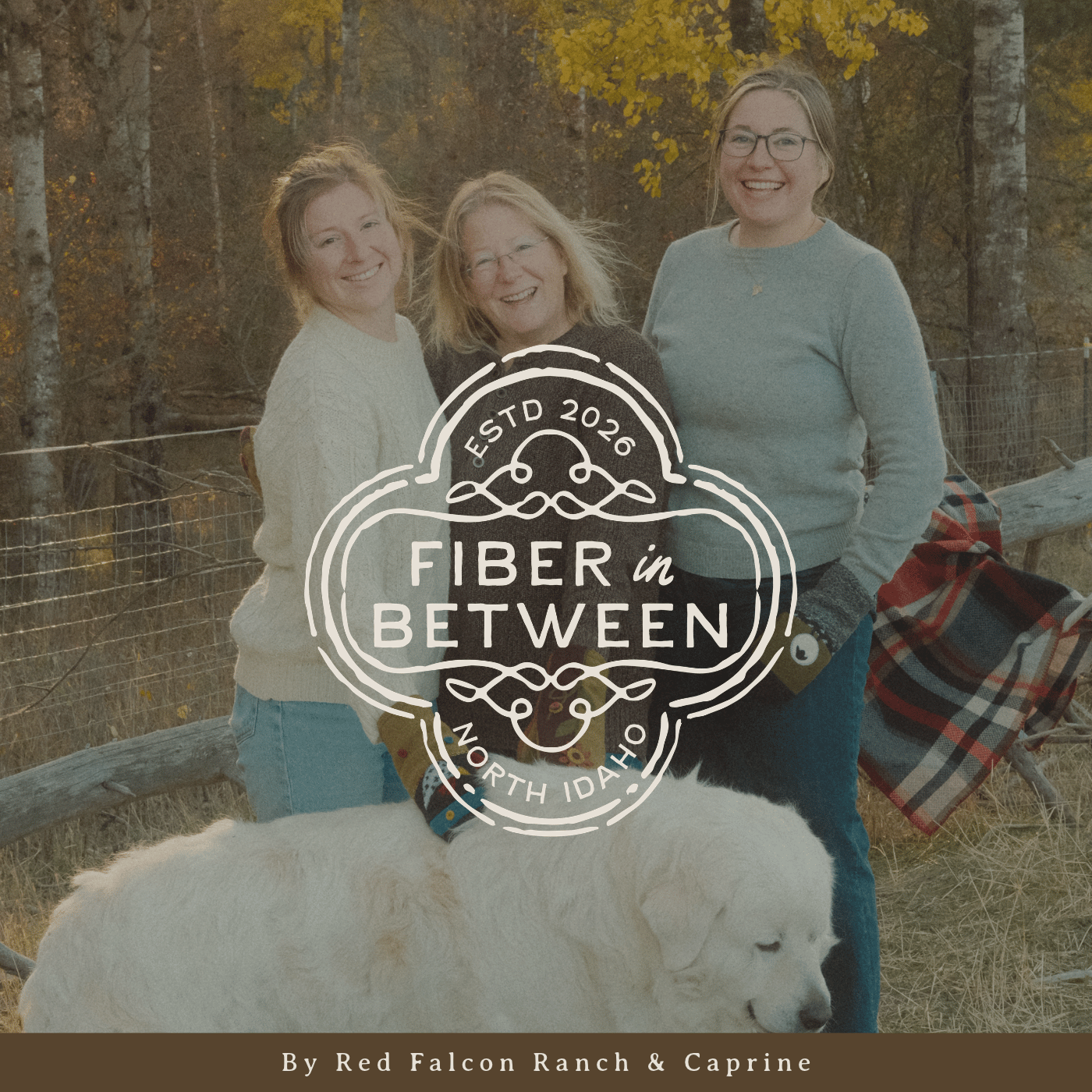
[00:33:14] Angela: And right now, we're sitting out in the pasture, it's almost golden hour. The trees are just the most lovely fall shades. It's peaceful, it's quiet. And we've been able to take this time to talk between each other and you, the listener, and just take this time to spend together. And it's so important to be able to do that. It's so easy to get caught and lost in the busy, busy, busy run here. Do that, do this, do that. I mean, our dishes aren't done, our laundry is not done because we're busy, busy, busy taking care of the goats. Like me. I have to write my letter. You're going to do something with the website.
It's, it's, it's important to take this time and not just be busy, busy, busy all the time.
[00:34:01] Sarah: Yeah. I don't like being too terribly busy, but, you know, being the ones behind the scenes here, we do
[00:34:07] Angela: do it all.
[00:34:08] Sarah: Like I. Something that's relevant is I need to change all of our newsletter flows. So when you sign up for the Red Falcon Ranch newsletter on our website, it enters you into a welcome flow and the verbiage and pictures are outdated from last year and I just have not made the time to switch them all out to be Red Falcon Ranch in our new voice and whatnot, who you've come to know. And I need to take the time to do that. So I'll probably start working on that tomorrow because they're being sent from Shop Caprine and they need to be sent from Red Falcon Ranch now.
[00:34:42] Angela: Right. Because everything, we need to keep everything consistent, not confuse people.
[00:34:46] Sarah: But this here, the podcast is Fiber in Between, and I'm very excited to see how it grows alongside the ranch and Caprine and in between and all the things.
[00:34:56] Angela: Right.
[00:34:57] Sarah: Because I believe Red Falcon Ranch is like the mothership and Caprine and Fiber in between fit inside.
While they can also stand alone like a puzzle, they fit together as well. So I'm very excited to see what the future holds for those and everything that we're gonna keep making.
It's a very exciting journey and I hope,
[00:35:17] Rachel: especially right now.
[00:35:18] Sarah: Oh, yes. There's so much happening right now. So I hope you, the listener enjoy following us along on the journey, joining in on the adventure. We're so glad to have you here, and I hope you learned more about the textile industry with mohair here in the United States, what goes on behind the scenes at Caprine, how we get the socks and throws from our ranch to you, and just the nuances that goes on behind that and our thought processes in all of it. And you just get a little bit of a taste on what's going on. So thanks for joining us. If you have anything else you'd like to know, please feel free to let us know. We'd love to do some more deep dives with you. Have a wonderful day.